Energy
Pressure and thermal demand
Every separation pathway has an energy cost that must be understood and managed.
Water systems · engineered differently
NURIT explores intelligent separation, energy-conscious desalination and resource recovery—translating physical principles into systems that can be built, tested and improved.
 ARC TECHNOLOGIES
About NURIT
NURIT is an engineering initiative exploring how water, matter and energy can be managed together—before a concept moves from physical principle to practical infrastructure.
Our purpose
NURIT investigates new approaches to desalination and complex separation without treating any stage as an isolated machine.
The development programme brings together intrinsic physical separation, controlled thermal processes, mechanical design and resource recovery. Each idea is framed as a testable system: model the behavior, identify the constraints, build the right components and measure what happens.
Physical separation, lower-pressure evaporation, focused thermal input and useful output recovery.
Through feasibility work, component design, instrumented prototypes and evidence-led iteration.
Validate the mechanism before making claims about performance or scale.
How NURIT approaches development
Define the behavior, inputs and operating context.
Connect separation, thermal, mechanical and control decisions.
Use measured evidence to decide what should progress.
The water challenge
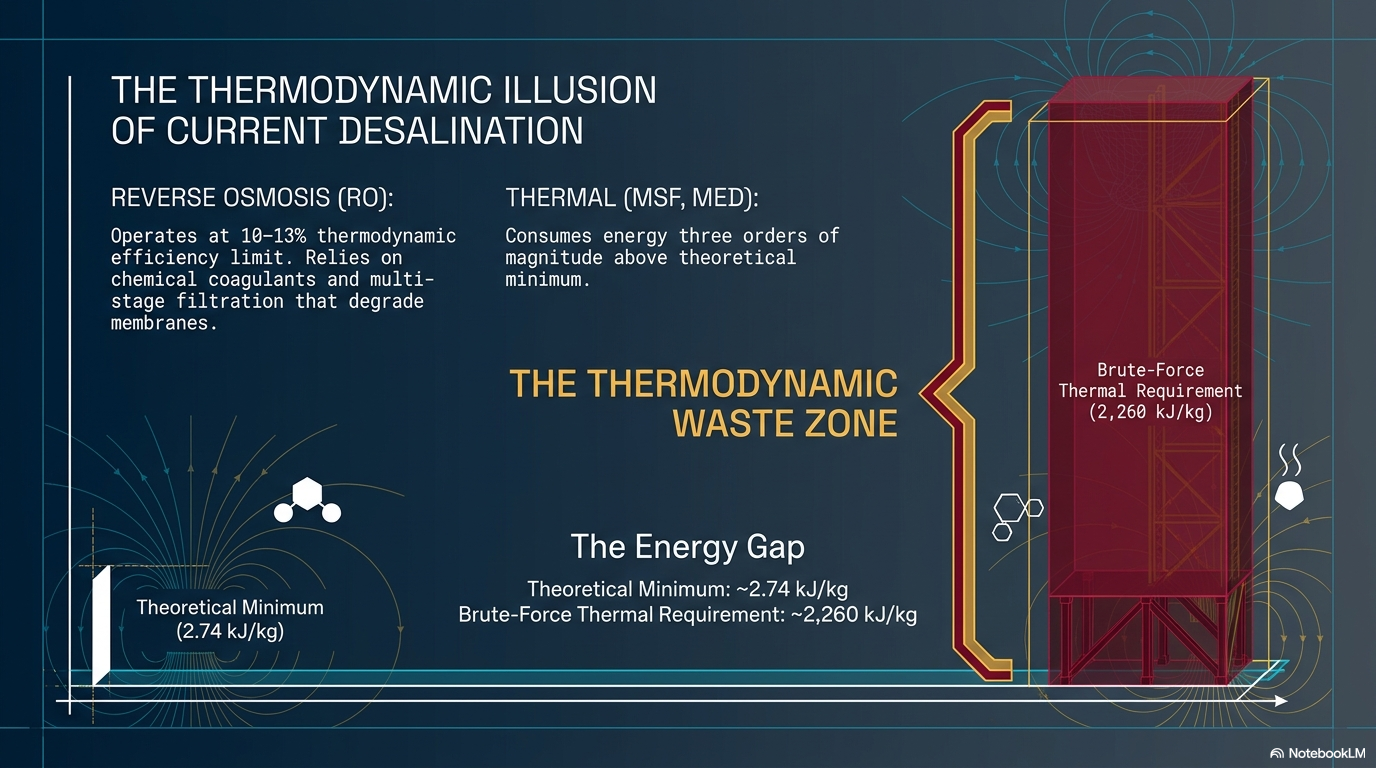
Conventional desalination can require substantial pressure or heat, careful pretreatment and management of concentrated waste streams. The engineering opportunity is broader than water production alone.
See the proposed processEvery separation pathway has an energy cost that must be understood and managed.
Pretreatment and cleaning can add operational layers, materials and residual streams.
A responsible system must consider what remains after fresh water is recovered.
Technology philosophy
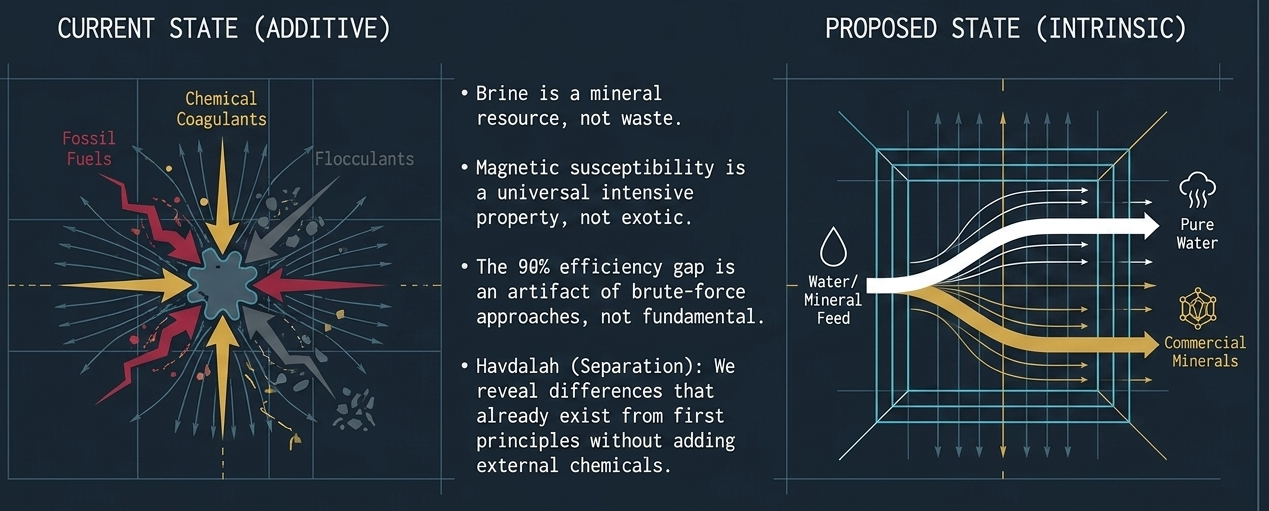
Explore intrinsic electric and magnetic responses as potential separation axes, instead of relying only on a barrier or added reagent.
Investigate physical processes that may reduce reliance on additives while retaining necessary pretreatment safeguards.
Evaluate sub-vacuum operation and focused thermal input to avoid heating more material than the phase change requires.
Consider water, separated minerals and reusable energy flows within the same mass-and-energy balance.
Define measurable states, operating envelopes and control logic so behavior can be repeated and improved.
Proposed system flow
A clear, six-stage interpretation of the current concept. Each stage remains subject to engineering validation.
Screen and condition feedwater to protect the proposed separation stages.
Explore electric and magnetic fields to influence dissolved species in flow.
Reduce system pressure so evaporation can be investigated at a lower temperature.
Direct available solar heat toward the liquid–vapour interface.
Collect condensed water for subsequent quality testing and conditioning.
Assess separated material and residual energy as potential useful outputs.
Core technology pillars
The programme combines field-based separation, low-pressure thermal processing, concentrated energy delivery and whole-system recovery thinking.
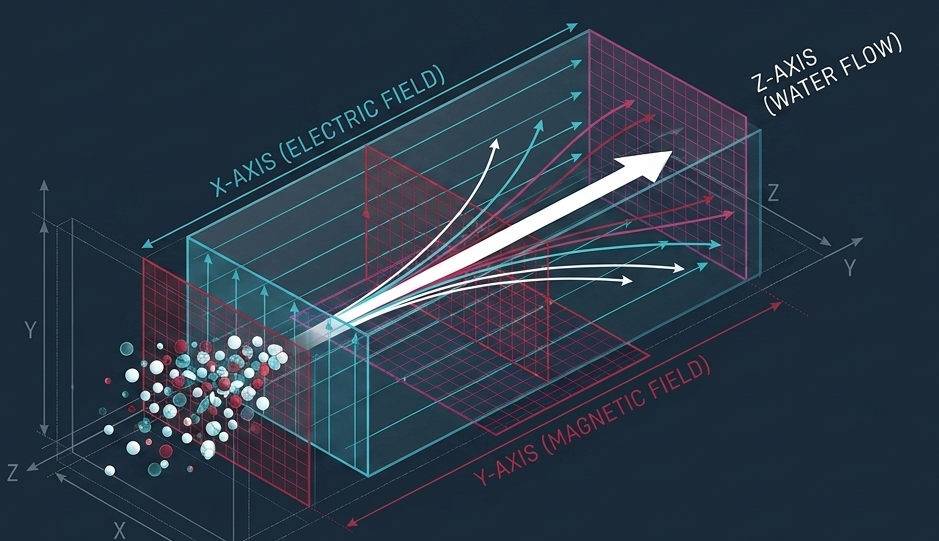
A research direction that considers electric and magnetic response as independent physical axes within a continuous-flow separation space.
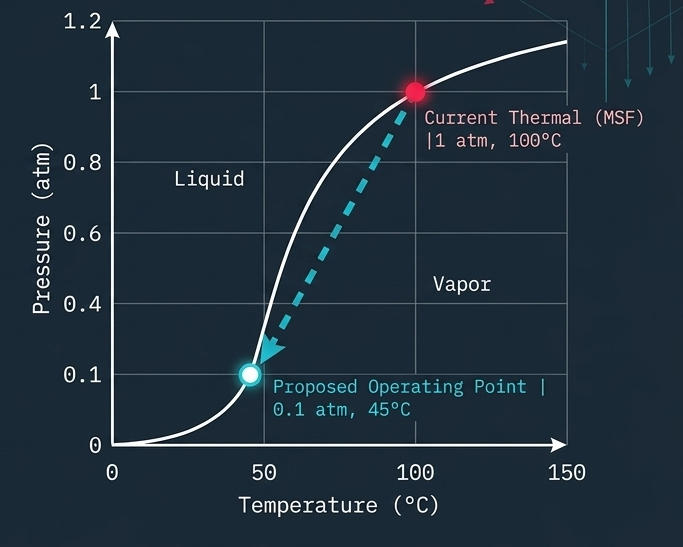
Reducing pressure can lower the temperature required for evaporation. NURIT proposes studying this alongside targeted heat delivery and controlled condensation.
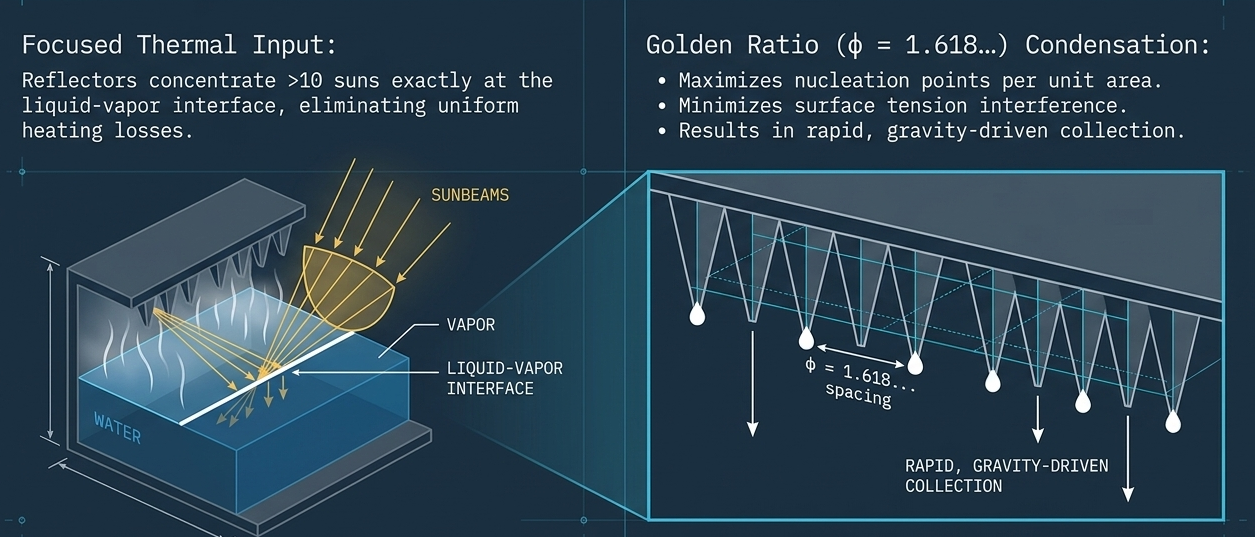
The proposed system explores directing solar thermal energy to the point of phase change rather than uniformly heating the full volume.
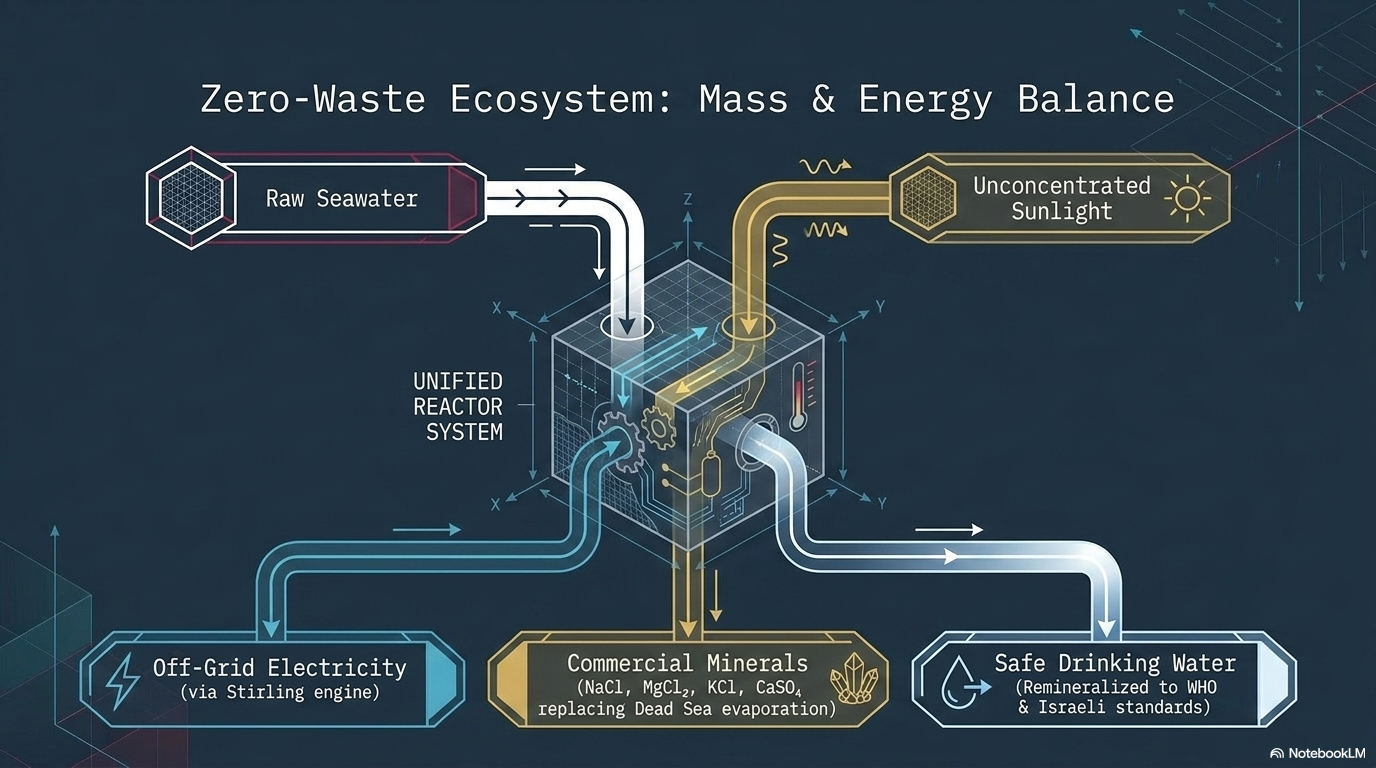
A design ambition to evaluate residual streams as potential resources—not a guarantee that all waste can be eliminated.
Featured development concept
A staged investigation into whether intrinsic separation and energy-conscious evaporation can form a coherent desalination architecture.
The challenge
The concept begins with a systems question: can separation, evaporation and resource recovery be orchestrated to reduce avoidable inputs and create more useful output pathways?
Current status Concept and research direction. Commercial performance has not been established.
Mechanical innovation
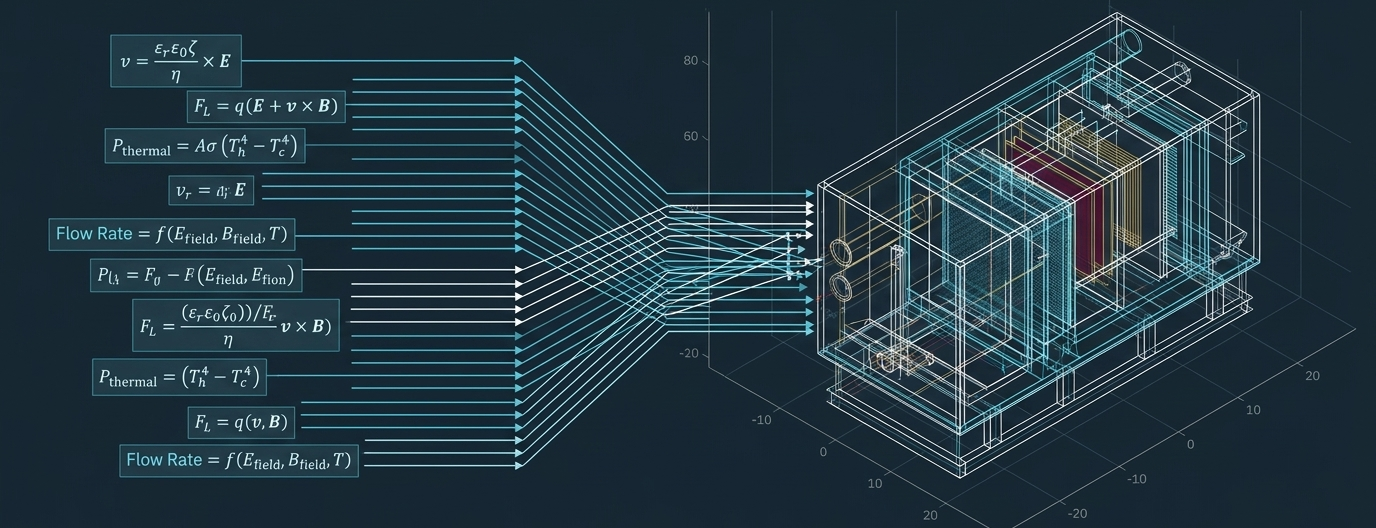
NURIT’s mechanical development process turns a system hypothesis into components, assemblies and controlled test conditions.
Prototyping is where geometry, material behavior, serviceability and instrumentation meet. Each iteration should answer a defined engineering question and inform the next design decision.
View the development roadmapFrame the mechanism and test question.
Resolve geometry, materials and interfaces.
Create rapid physical iterations where suitable.
Control variables and instrument behavior.
Integrate functional subsystems.
Compare measured results with the model.
Engineering roadmap
A staged development path designed to retire technical risk, refine the system and establish credible performance data.
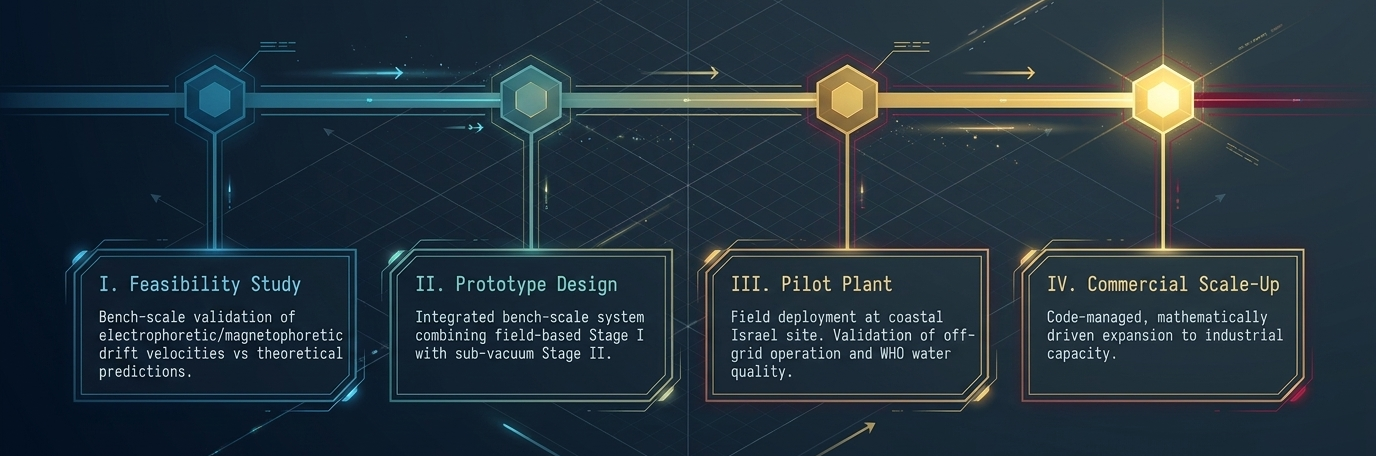
Model governing behavior, energy balance, separation conditions and key engineering constraints.
Build bench-scale modules to characterize separation, pressure, heat transfer and condensation.
Integrate subsystems into a controlled pilot capable of producing reliable operational data.
Evaluate stability, water quality, maintenance needs, energy demand and recovery pathways.
Proceed only when evidence supports engineering, manufacturing and deployment decisions.
Frequently asked questions
The concept is in development. These answers separate the intended architecture from results that still need to be demonstrated.
It is NURIT’s development concept for combining separation based on intrinsic physical responses with lower-pressure thermal processing, condensation and resource-recovery pathways. It is a proposed architecture, not yet a commercially validated process.
Reverse osmosis uses pressure to move water through selective membranes. NURIT is investigating a different route involving field-based separation and sub-vacuum evaporation. Any practical comparison of energy, cost, quality or maintenance requires testing data that is not yet established.
Lowering pressure reduces the temperature at which water evaporates. The concept explores whether this can be integrated with focused thermal input and controlled condensation in a useful overall energy balance.
Focused solar collection is proposed as a potential thermal input for the evaporation stage. Its contribution would depend on site conditions, collector design, storage or backup strategy, and measured process demand.
Mineral recovery is a potential pathway being considered within the system architecture. Recoverable species, purity, process energy and commercial relevance would need to be established through characterization and pilot testing.
No commercial availability is claimed. The supplied material describes a concept and staged development programme moving from feasibility and prototype work toward a possible pilot and later scale-up.
Relevant partners may include research organisations, component and engineering specialists, water-industry operators, technology-development teams and investors comfortable with evidence-led development.
Use the enquiry form on the Contact page to describe your organisation, area of interest and the technical or development question you would like to discuss. No direct contact details are published because none were supplied for this site.
Start a conversation
Share the context, development stage and the question you want to investigate. Use the dedicated contact page to send a structured project enquiry.
Start a project enquiry